Thursday, February 26, 2015

Lighting

ARTIFICIAL LIGHT(Single Source)
Silhouette Artificial Light Black and White

Split Artificial Light Black and White
Rembrant Artificial Light Black and White
Loop Artificial Light Black and White
Butterfly Artificial Light Black and White
Direct Light, Artificial Light Black and White
Shade Artificial Light Black and White

Artificial Light (Multiple Sources)
Hard, Artificial Light (multiple sources)
Soft, Artificial Light (multiple sources)
Reflector, Artificial Light (multiple source)

Existing Light
Front, Existing Light
45 Degree, Existing Light
Side, Existing Light 
Back, Existing Light

Natural Light
Direct Light, Natural Light
Shade, Natural Light

Monday, February 2, 2015

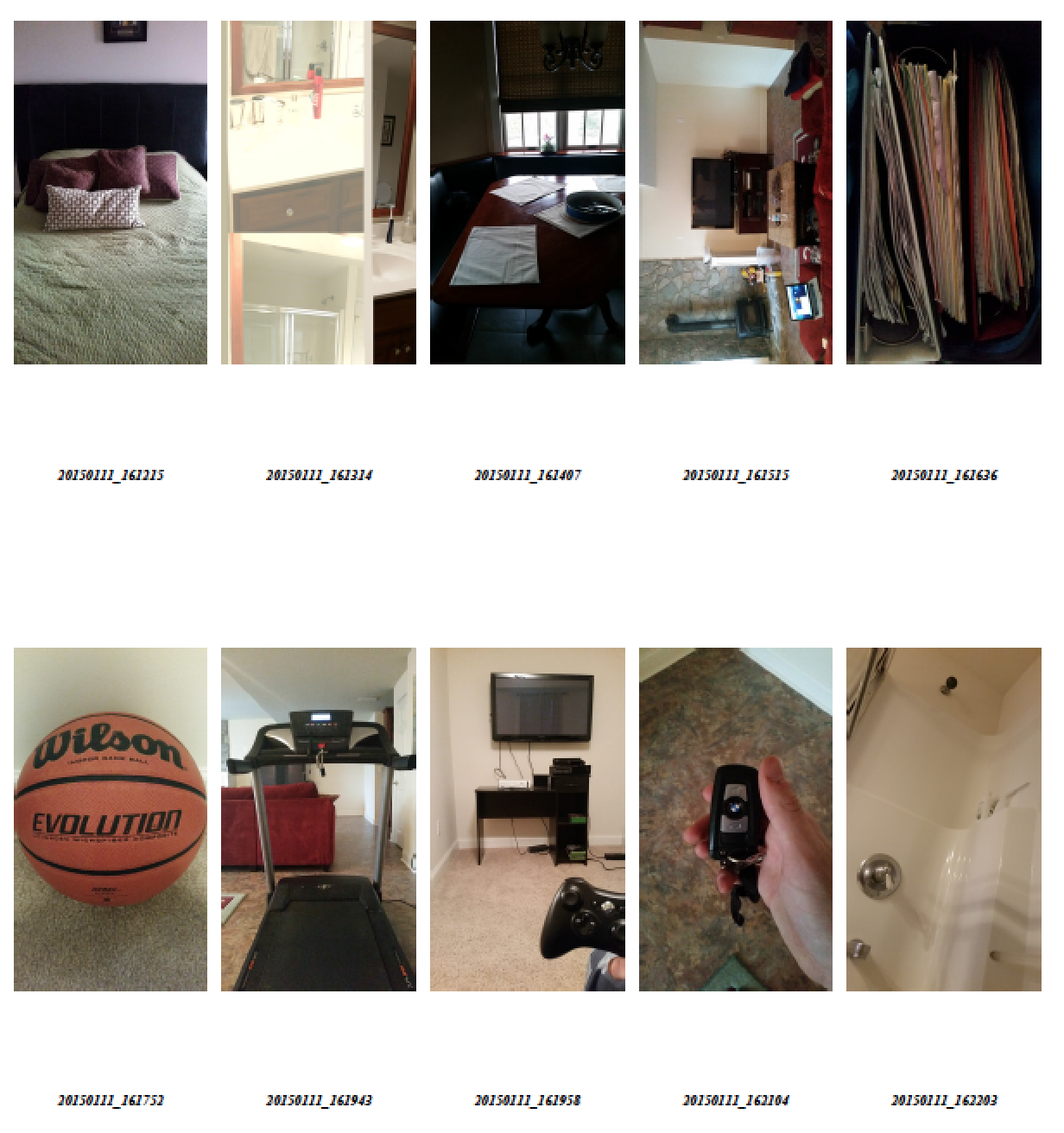
10 photos of the day of Samel


Elements of Principals:

Treadmill: Symmetrical Balacne because it helped the image show more effect making the treadmill stand out more.

Bed: Unity because the image itself comes into a complete picture due to the colors of the bed and sheets.

Shower: Worm's eye view because it shows how i actually shower because the shower is high so i have to look up at it to take a shower.

Sink with mirror: Simplicity because its all just objects that everybody uses in their daily lives.

Table: Curved lines because of the table which is curved making it more curvy.

Binder: Variety because there are many colors laying on top of each other all leading into one picture.

BMW Key: Emphasis because the image is only focussing on the BMW key.

TV: Horizon Line because in the picture there is a imaginary horizon line going across the room.

Game Room: Rule of Thirds because the picture can be divided into thirds and be used for more pictures.

Wilson ball: Texture because you can see the little details on the basketball.


Friday, December 19, 2014

Monday, November 24, 2014

Elements of Principals of Photography

Leading Lines: Leading lines are lines within an image that leads the eye to another point in the image, or occasionally, out of the image. 


Vertical Lines: Solid vertical lines are attention-getters and can be used to create tension, to act as direct guides and paths, and to act as dividers and natural frames. Being the powerful composition elements they are a certain degree of care should be taken when dealing with prominent vertical lines.        

Horizontal Lines: a line parallel to a surface or to another line considered as a based
                               

Diagonal Lines: Diagonal lines generally work well to draw the eye of an image’s viewer through the photograph. They create points of interest as they intersect with other lines and often give images depth by suggesting perspective.   


Curved Lines: Curved lines may add beauty and grace to an image. They are also used as a popular design technique for leading the eye into the frame. In contrast to straight or patterned lines, meandering curved lines allow the eye to explore an image in a smooth, free-flowing manner.      


Symmetrical Balance: In design, the near or exact matching of left and right sides of a three-dimensional form or a two-dimensional composition.    


Asymmetrical Balance:  not identical on both sides of a central line; unsymmetrical; lacking symmetry    


Unity: All elements of a piece work together to produce a balanced
       

Variety:  The quality or condition of being various or varied; diversity.


Movement/ Rhythm: a movement in which some elements recurs regularly.  Like a dance it will have a flow of objects that will seem to be like the beat of music.  Rhythm is the path the viewer’s eye takes through the artwork, often to a focal area. It can be directed along lines, edges, shapes and color. Movement is closely tied to rhythm.


Emphasis: special importance, value, or prominence given to something.


Proportion/Scale: In art the size relationship between an object and the human body is significant. In experiencing thescale of an artwork we tend to compare its size to the size of our own bodies. Proportion refers to the relative size of parts of a whole (elements within an object).          


Repetition/Pattern: Repetition refers to one object or shape repeated; pattern is a combination of elements or shapes repeated in a recurring and regular arrangement; rhythm--is a combination of elements repeated, but with variations.        


Bird's eye view: a general view from above, or as if from above.


Worm's eye view: a view as seen from below or from a humble position.


Horizon line: The horizon (or skyline) is the apparent line that separates earth from sky, the line that divides all visible directions into two categories: those that intersect the Earth's surface, and those that do not.       


Rule of Thirds: The rule of thirds is simply a guideline that states that a photo is compositionally more interesting if the important elements of the image lie on one of the grid lines or their intersections. 


Framing: the action of framing something.


Simplicity:  the quality or condition of being easy to understand or do.
                 

Texture: the feel, appearance, or consistency of a surface or a substance.